


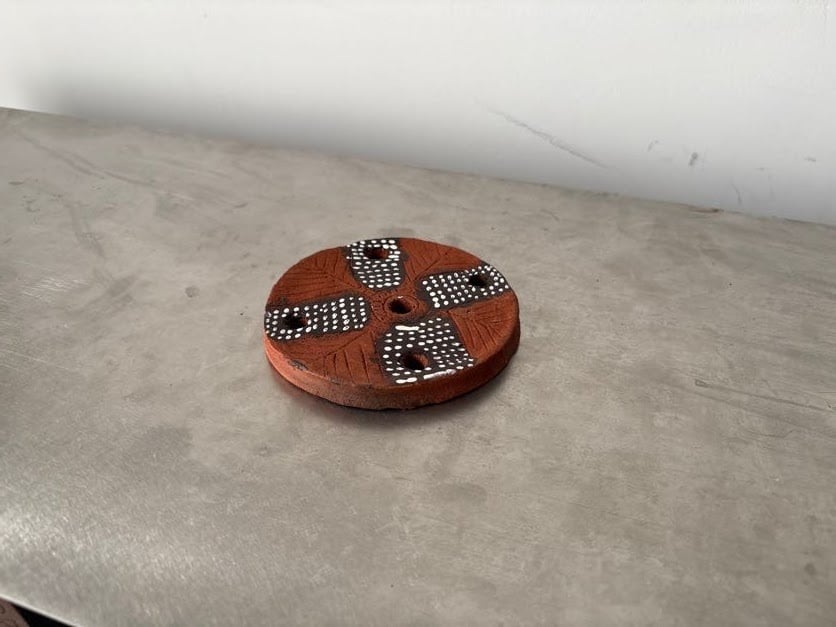
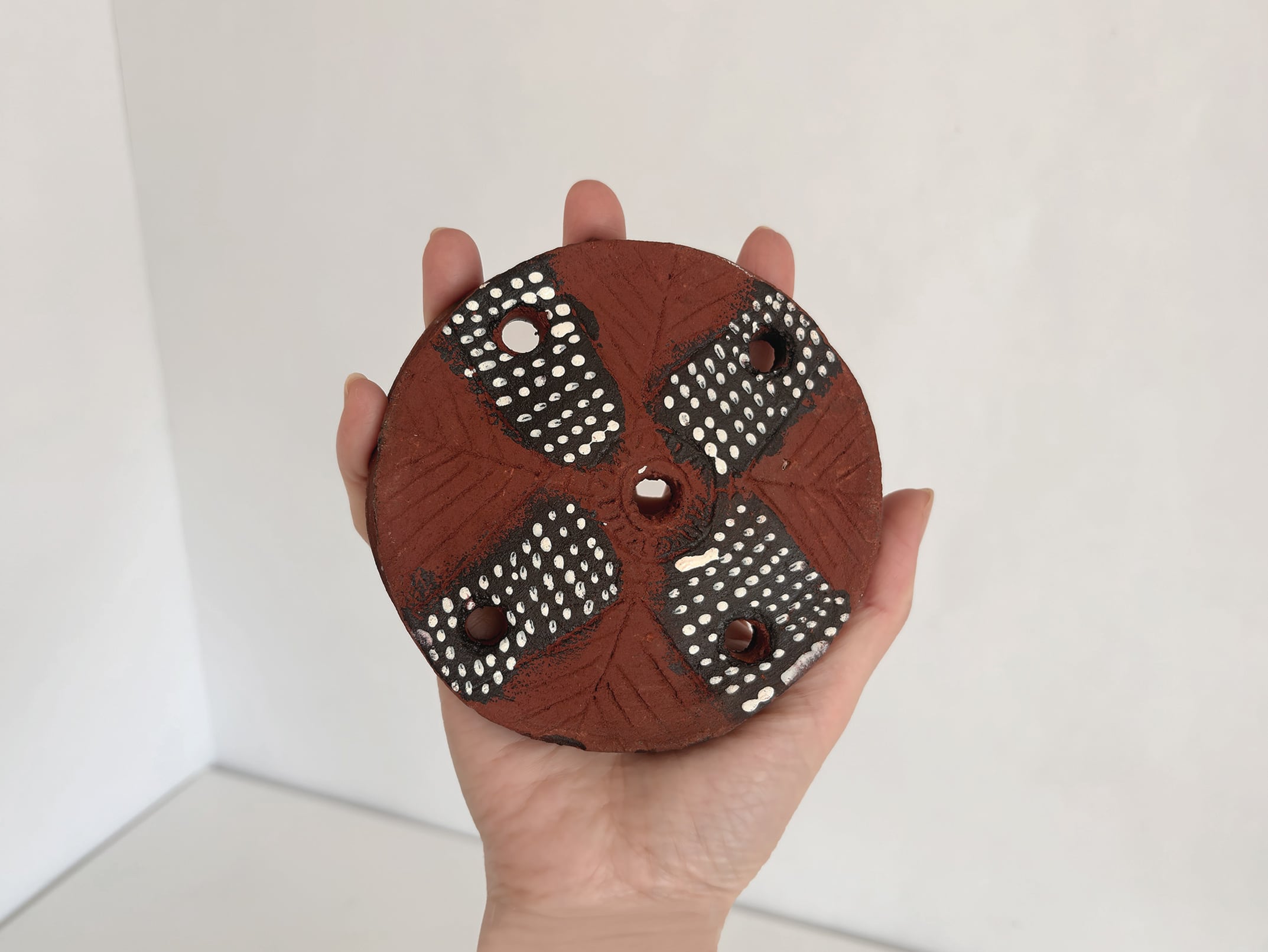

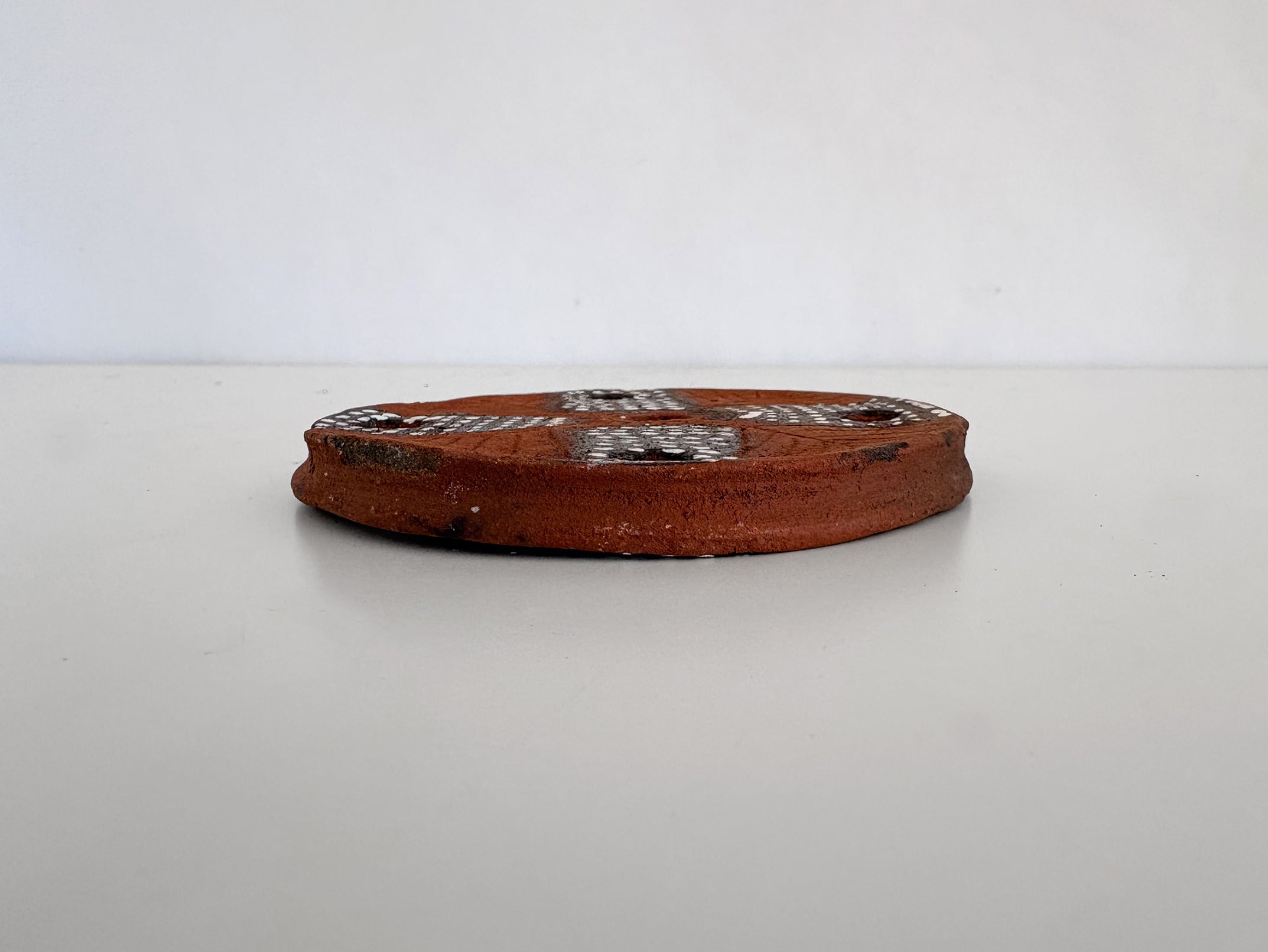
エチオピア ムルシ族 リッププレート デヴィニャ 陶製 ブラウン アフリカ オブジェ | Ethiopia Mursi Lip plate
¥9,800
SOLD OUT
NOTES/注意事項
- サイズは手作業で計測しているため、多少の誤差が生じる場合があります。
- ご利用の端末やモニター設定により、実物と画面上の色味・明るさが異なる場合があります。
- 詳細画像のご希望やご質問がございましたら、お気軽にお問い合わせください。
- アンティーク・ヴィンテージ作品には、多少のがたつき、傷、欠け、色落ち、汚れなどが見られる場合があります。これらも作品が重ねてきた時間と風合いの一部として、あらかじめご了承ください。
- WOUETでは、アフリカ各地で選んだ新品・中古品・ヴィンテージ作品を取り扱っています。
- 商品状態はできる限り詳しく掲載していますが、新品・未使用品にも手仕事や保管・輸送に由来する小さな傷、色むら、色落ち、汚れなどが見られる場合があります。
IMPORTANT NOTES
- Measurements are approximate and may vary slightly.
- Colors and brightness may differ from the actual item depending on your device or display settings.
- Please contact us if you would like additional detailed photographs or have any questions.
- Antique and vintage pieces may show slight wobbling, scratches, chips, color loss, stains, or other signs of age. We regard these traces as part of the character and history of each piece.
- WOUET offers new, pre-owned, and vintage works sourced across Africa.
- We describe the condition of every item as accurately as possible. However, even new or unused pieces may have minor scratches, variations in color, fading, or marks resulting from handcrafting, storage, or transport.
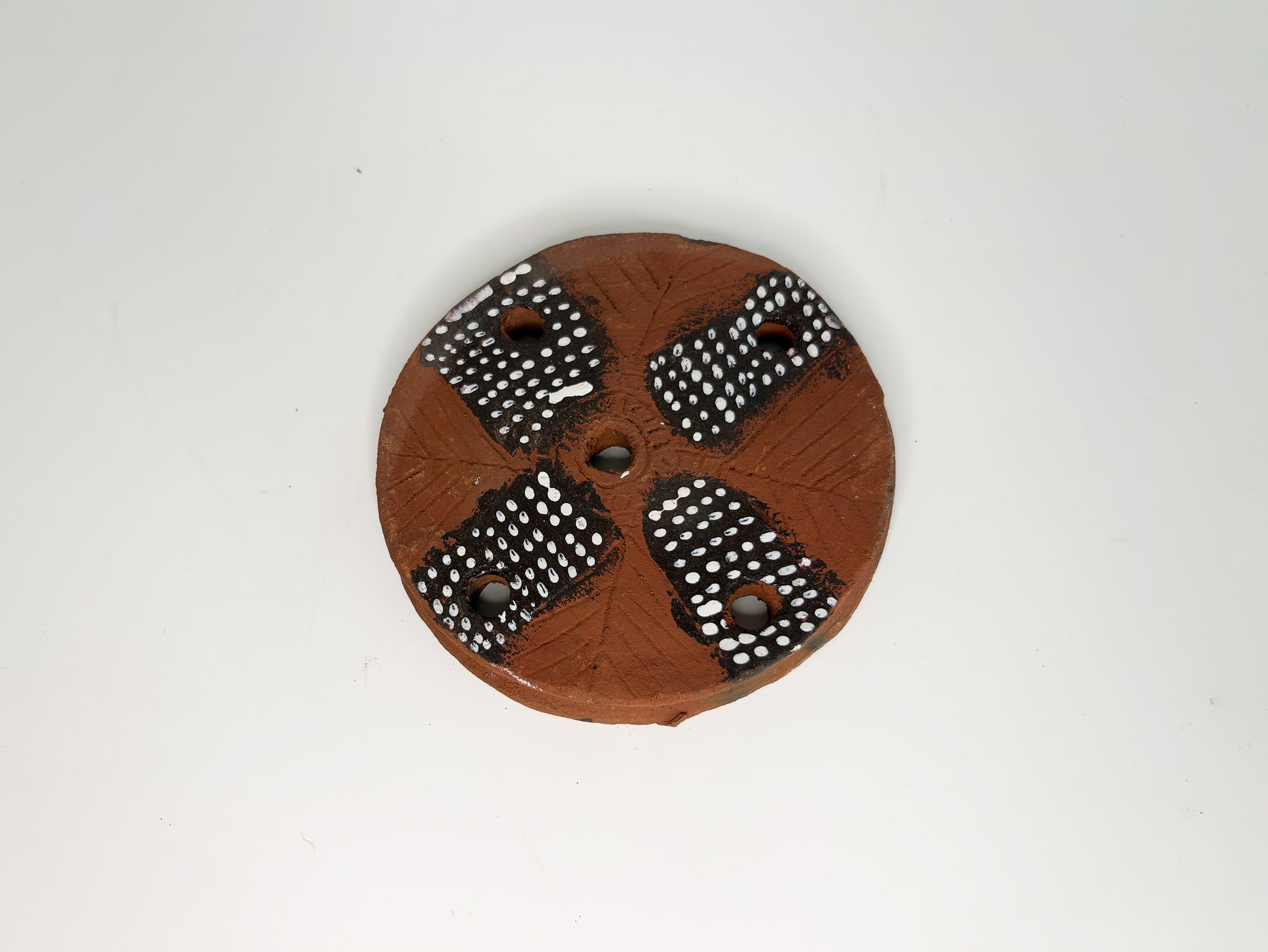
エチオピア南西部オモ渓谷に暮らすムルシ族によって作られたリッププレート「デヴィニャ」。アフリカ民芸を象徴する存在であり、アフリカンアートやトライバルアートとしても高く評価される陶製作品です。
手成形の陶土に描かれた抽象文様と静かな存在感は、アフリカ工芸ならではのプリミティブな美しさを感じさせます。
商品の特徴と素材:
このリッププレートは、エチオピア南西部オモ渓谷周辺に暮らすムルシ族によって制作された陶製作品です。
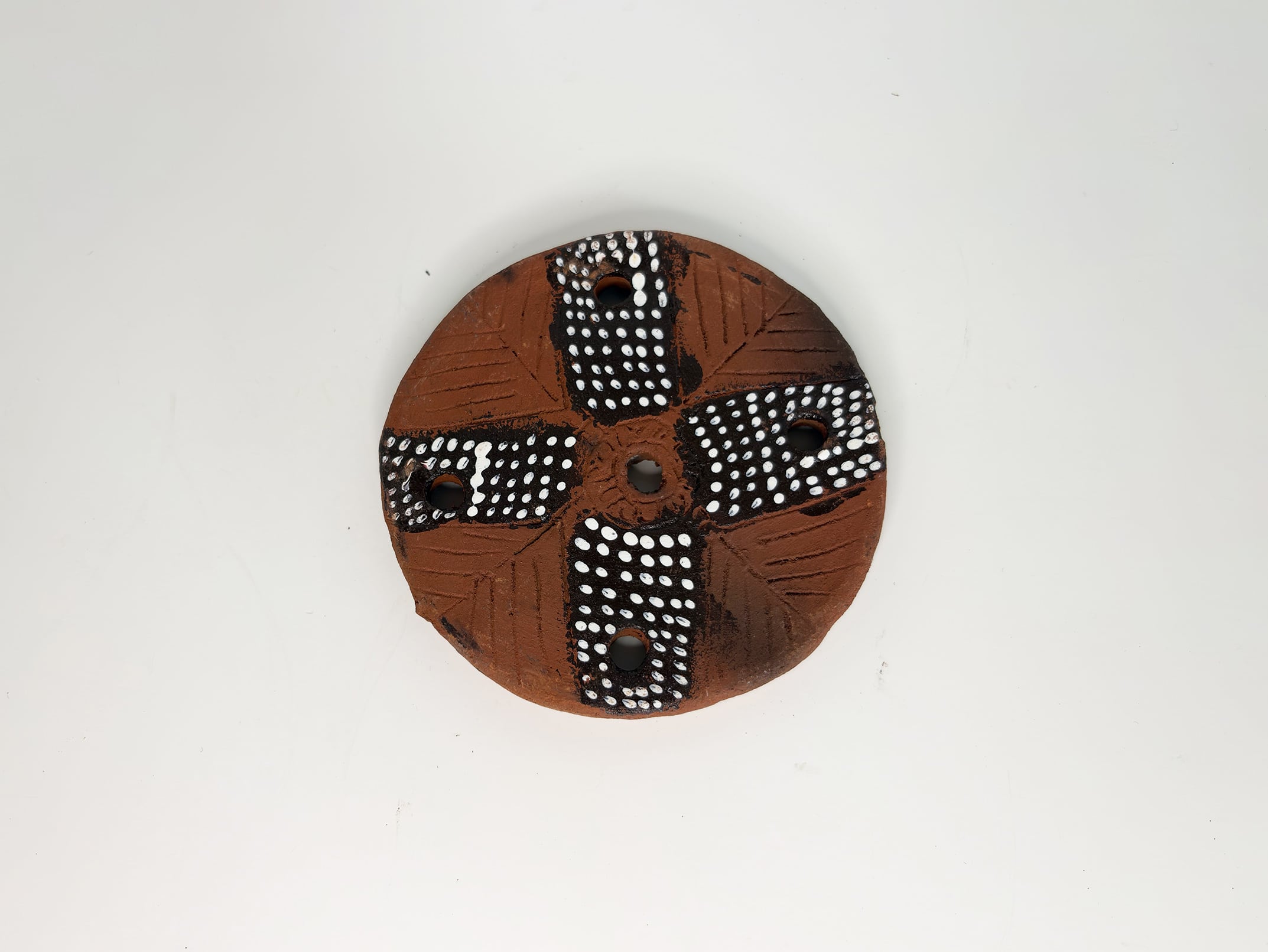
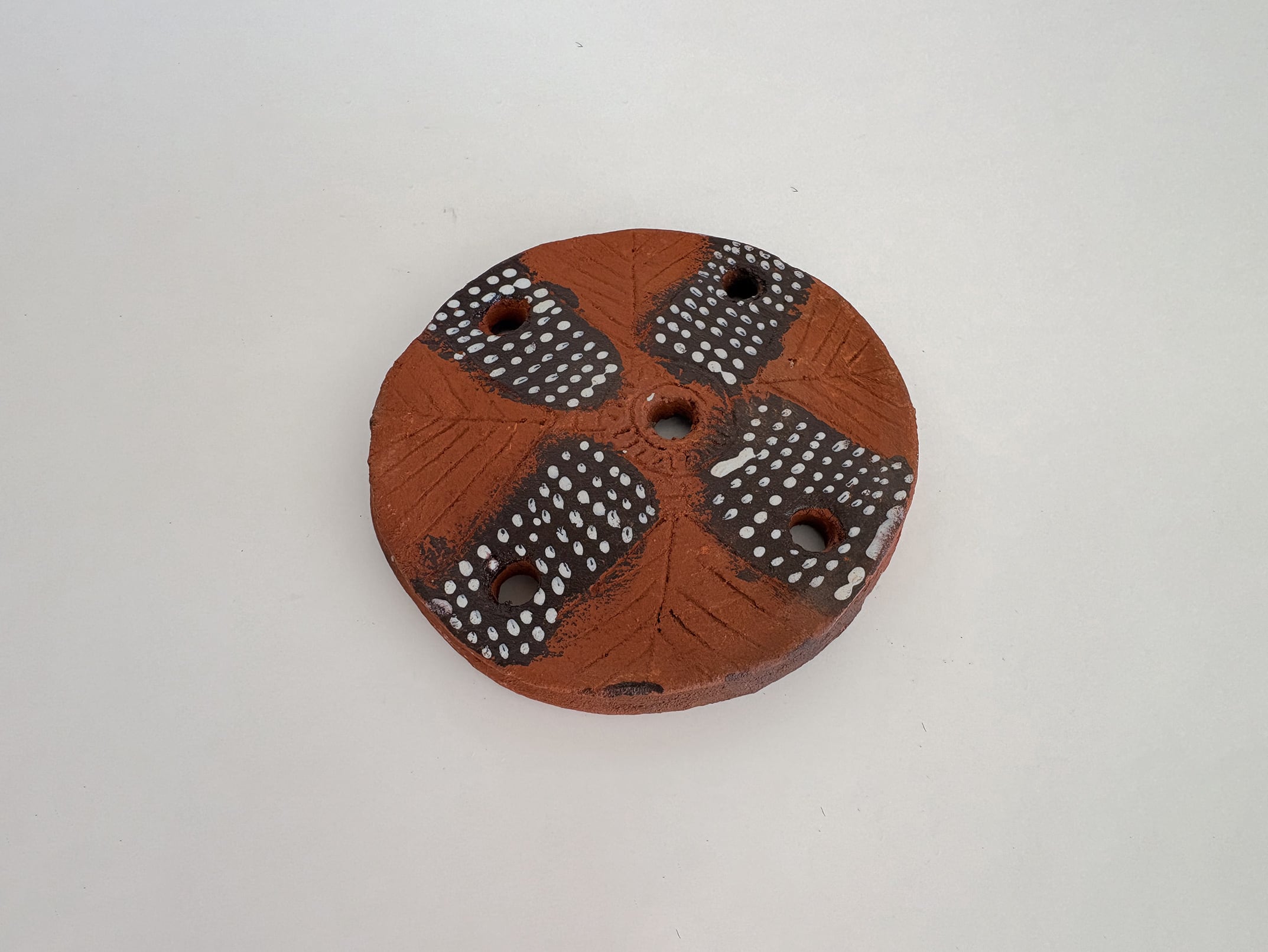
焼成された陶土の素地に、グレーがかった茶色と白の顔料で抽象的な文様が描かれています。
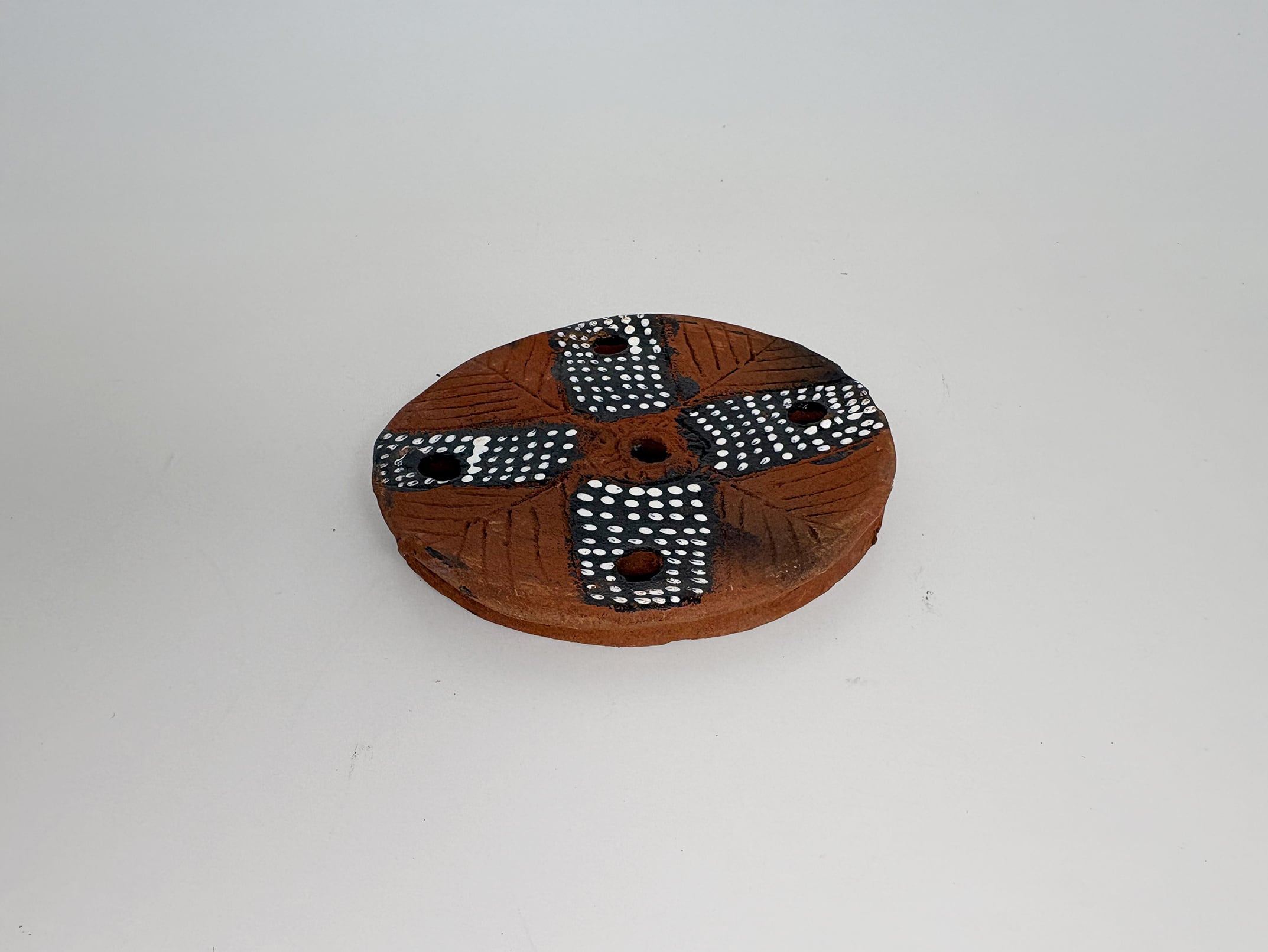
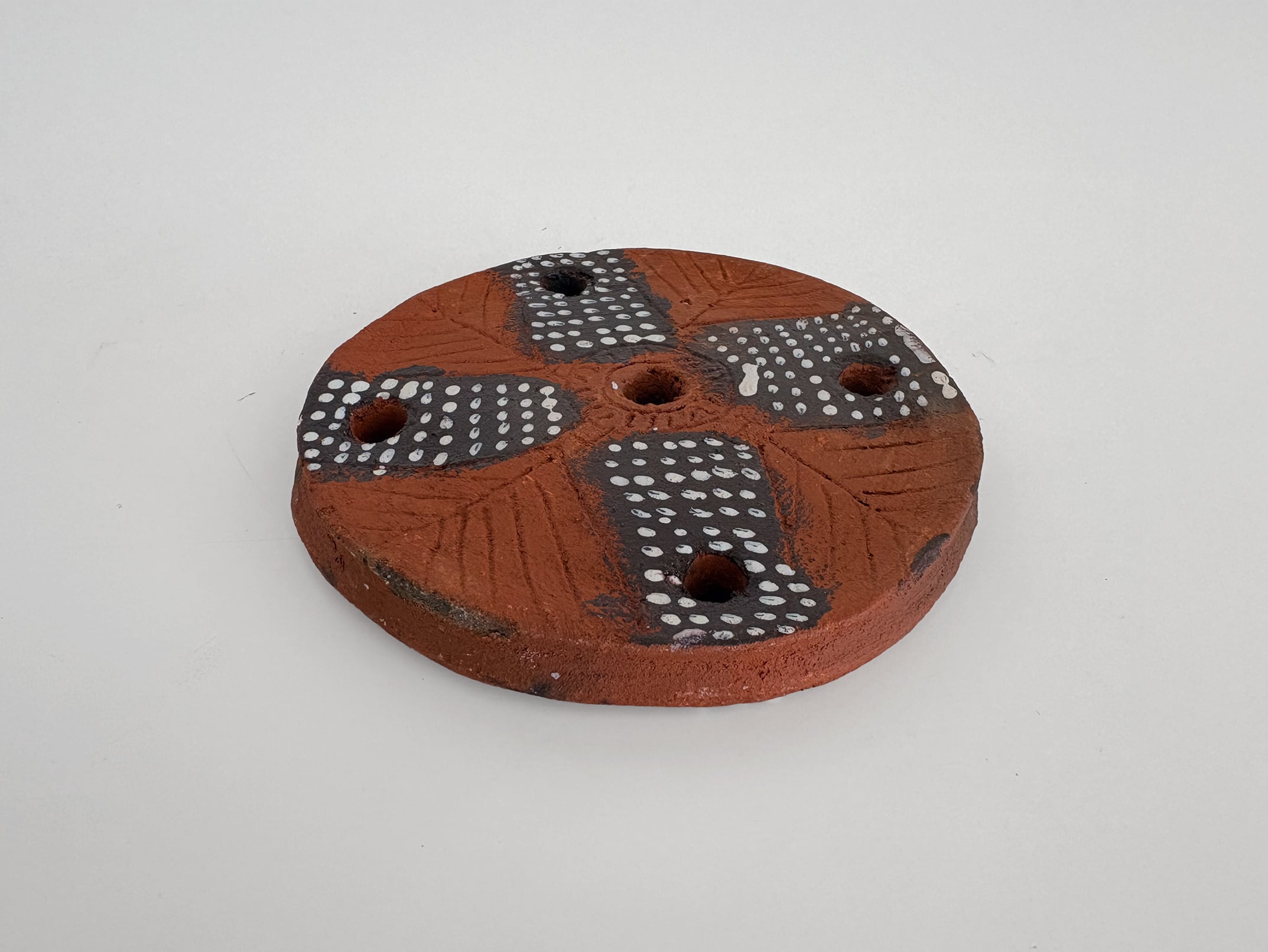
円形という明確なフォルムと、手仕事による揺らぎのある表情が特徴です。
点描の配置や色の濃淡には作り手の手の動きがそのまま残り、工業製品にはない温度を感じさせます。
少し暗めの空間では色の印象が変化して見えることもあり、光の環境によって異なる表情を楽しめるのも魅力です。
すべて手成形による一点もののため、模様や質感は一つ一つ異なります。
文化的背景:
ムルシ族の女性たちが使用するリッププレートは、現地の言葉で デヴィニャ と呼ばれています。
一般的には思春期を迎える15歳前後から装着され始め、成長とともに少しずつ大きなものへと替えられていきます。
大きさや文様は一律ではなく、作り手や持ち主の選択によって異なります。
この身体装飾の背景には、ムルシ族が歩んできた歴史があると考えられています。
16世紀頃から始まったヨーロッパ人による奴隷貿易の時代、外見的に価値が高いと見なされた人々が奴隷として連れ去られる危険にさらされていました。
そこで女性たちは唇に大きなプレートを入れることで自らの外見を変え、連れ去られることを避けようとしたという説が伝えられています。
現在ではムルシ族の文化的象徴として知られる存在となっています。
使い方の提案:
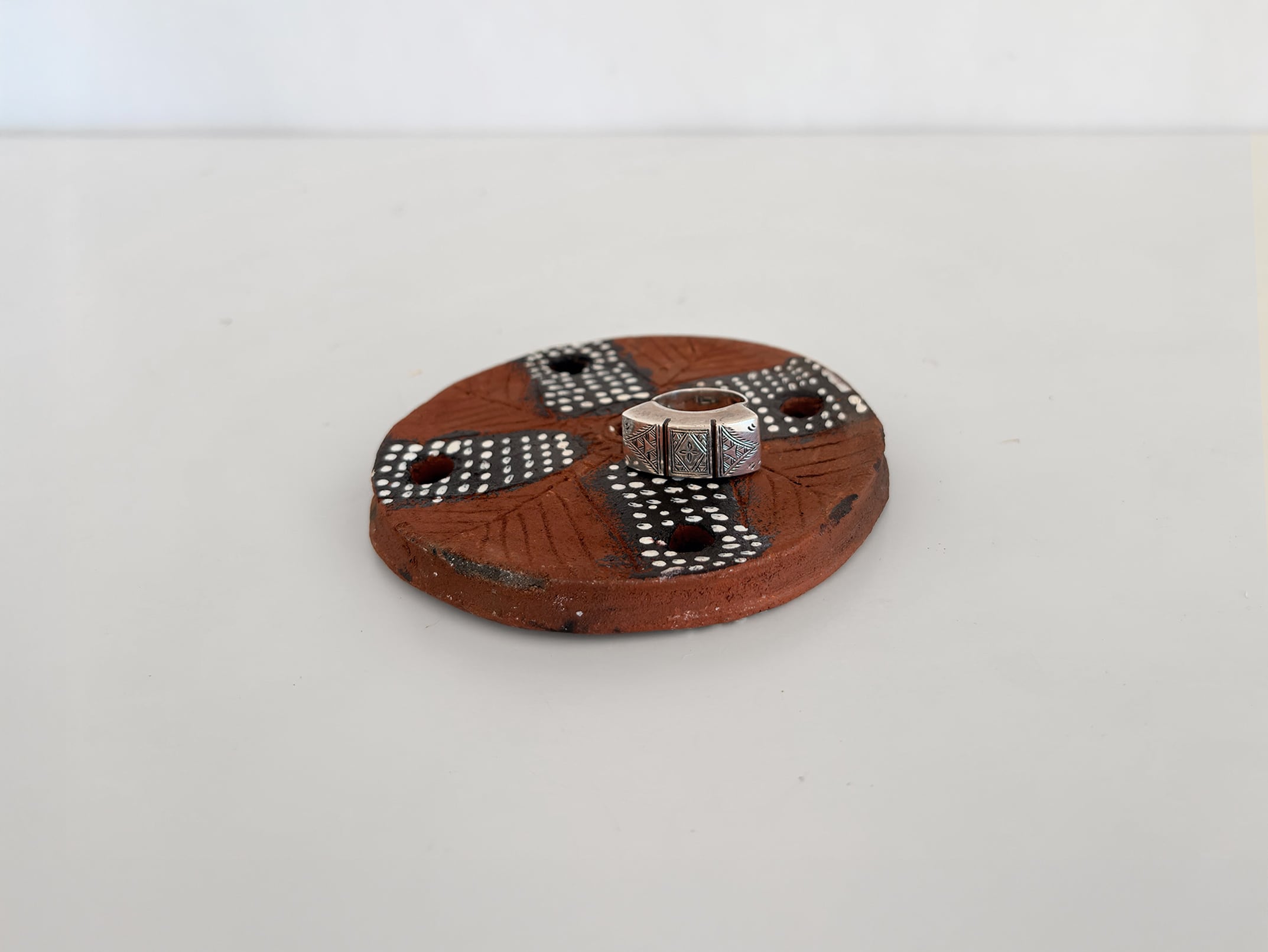
現在の暮らしの中では、小さなトレイとして取り入れることができます。
・アクセサリートレイ
・指輪や時計の置き皿
・玄関の鍵置き
・デスクの小物トレイ
手のひらサイズのため空間を圧迫せず、静かなアフリカオブジェとしてインテリアに溶け込みます。アフリカンアートやプリミティブアートを取り入れた空間にもよく馴染みます。
希少性:
本品は現地で新たに制作された新品ですが、使い込まれたような表情は経年ではなく制作段階から意図された仕上げです。
ムルシ族のリッププレートは現在も自然素材と手仕事を基本として制作されており、
均一な完成度ではなく、揺らぎや不完全さを含めた美意識が特徴です。
すべて手作業のため同じものは二つとなく、それぞれが唯一無二の一点です。
メンテナンス:
陶製のため強い衝撃にはご注意ください。
柔らかい布で軽く拭く程度で日常的なお手入れが可能です。
ムルシ族の文化と歴史を背景に生まれたこの小さなプレートは、
単なる器ではなくアフリカの手仕事と物語を感じられるアートピースでもあります。
日常の中で静かに使いながら、
アフリカの文化とともに暮らす楽しさを感じていただければ幸いです。
This lip plate was made by the Mursi people living in the Omo Valley in southwestern Ethiopia.
It is crafted from fired terracotta using locally sourced, iron-rich clay. No glaze is applied; the surface has a dry, matte texture that preserves the natural character of the clay itself. The material reflects the distinctive qualities of clay found throughout the Omo Valley, offering an organic sense of variation rather than artificial uniformity.
The color palette is based on calm, earthy brown tones, accented with white pigment in dotted and abstract patterns. In lower light, the colors appear deeper and more subdued, creating a quieter and more atmospheric impression. The way its appearance subtly changes with the surrounding environment is one of the piece’s defining qualities.
The form is a clear circle, with a single hole at the center and several additional holes around it. The central hole was originally intended for wearing in the lip, while the surrounding holes may have served multiple purposes, including stabilization during wear, preventing distortion during drying and firing, or functioning as decorative elements.
Each piece is entirely hand-shaped and one of a kind. Variations in the placement of the dotted patterns, the wavering of lines, and the depth of color retain the direct trace of the maker’s hands. Mursi lip plates are still produced today using natural materials and traditional handcraft methods, and this piece was created within that continuing tradition. Rather than striving for uniformity or technical perfection, it reflects an aesthetic that embraces irregularity and imperfection.
The tradition of using lip plates among the Mursi people is rooted in their history. Lip plates are known locally as “Devinya.” They are typically worn beginning around the age of fifteen, during adolescence, and are gradually replaced with larger ones over time. There is no fixed standard for size or decoration; each plate reflects the choices of its maker and wearer.
There are several theories regarding the origins of this form of body adornment, one of the most widely cited being its connection to the European slave trade beginning around the 16th century. At that time, individuals considered physically valuable were at greater risk of being taken as slaves. It is said that women intentionally altered their appearance by wearing large lip plates in order to reduce this risk. This account is often described as one of the possible origins of the Devinya.
In contemporary settings, the piece can be used as a small tray. It works naturally as a place for jewelry or small personal items on a desk, as a resting place for rings or a watch in the bedroom, or as a simple key tray near an entrance. Its compact, palm-sized form does not overwhelm a space and allows it to blend quietly into everyday living.
Because each piece is made entirely by hand, variations in pattern, dot placement, and color depth are to be expected. No two are the same, and each exists as a unique object. Carrying a sense of history while remaining suited to modern life, this piece can be appreciated as a singular presence to be used and lived with over time.
Origin : エチオピア / Ethiopia
Material : 陶器 / Clay
Category : New
Dimension(約): W11.4cm × H1.1cm
<注意事項>
・サイズは多少の誤差がございます。
・お使いのデバイスの環境設定により、実物と画面上の色味・明るさが異なる場合 があります。
・その他詳細画像のご希望・ご質問等ございましたら、お気軽にお問い合わせ下さい。
・当店商品はアフリカ各地からの新品・中古品・ヴィンテージ作品を販売しております。
商品詳細欄にて出来る限りの商品説明はいたしておりますが、新品の物に関しても傷、色はげ、汚れなどがある事をご理解願います。
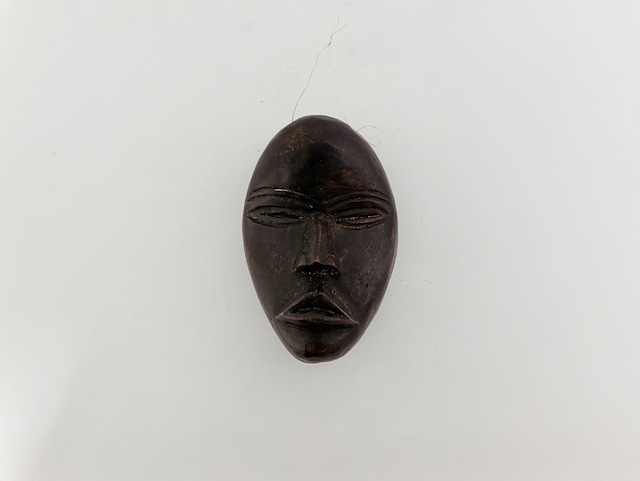 コートジボワール ダン族 パスポートマスク|ヴィンテージ 木彫仮面 アフリカマスク|Vintage Passport Mask, Dan people, Côte d'Ivoire¥14,500
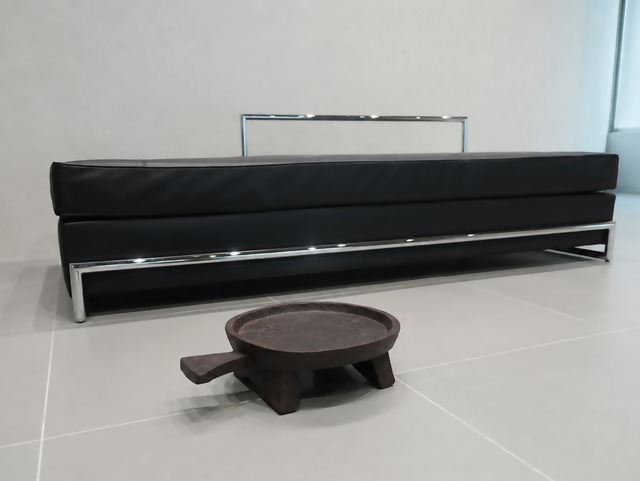 エチオピア ヴィンテージ コーヒーテーブル|持ち手付き アフリカ家具 ローテーブル|Ethiopian vintage Coffee Table¥29,800
 エチオピア ヴィンテージ スクエア コーヒーテーブル|アフリカインテリア アフリカ 家具|Ethiopian Low table¥38,900